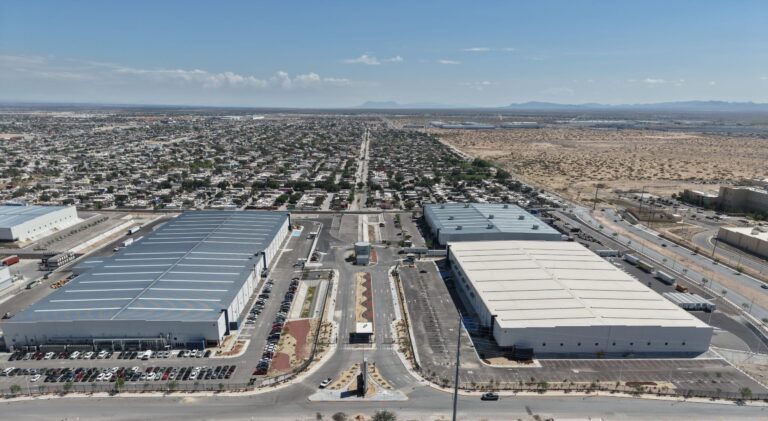
In today's world, data is the new oil for business. The exponential growth in the volume of data that organizations handle has driven an unprecedented demand for reliable technology infrastructure. In this context, data centers have become the operational core of enterprises, financial institutions and digital platforms.
More and more organizations are looking for solutions that combine security, scalability and speed of implementation, and this is where industrial buildings emerge as an efficient alternative.
But what conditions must an industrial building meet for a data center to operate safely and efficiently? Below, we analyze the key requirements that determine the success of this type of facility.
Reasons to install a data center in an industrial building
The growth of e-commerce, the digitalization of processes and the nearshoring boom in Mexico have multiplied the demand for high-availability technological infrastructure. Against this backdrop, installing a data center inside an industrial building has become a logical strategy for companies seeking to:
- Reduction in implementation times, taking advantage of spaces already equipped with basic services.
- Greater operational control by centralizing critical data systems and processes within your industrial facilities.
- Cost efficiency, avoiding millionaire investments in construction from scratch.
- Space and scalability, with modular infrastructure that allows for growth according to demand and future technology needs.
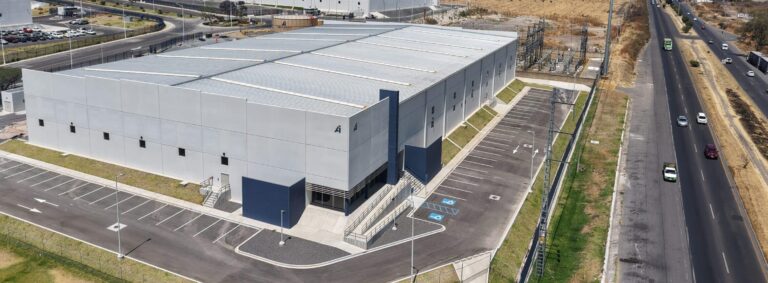
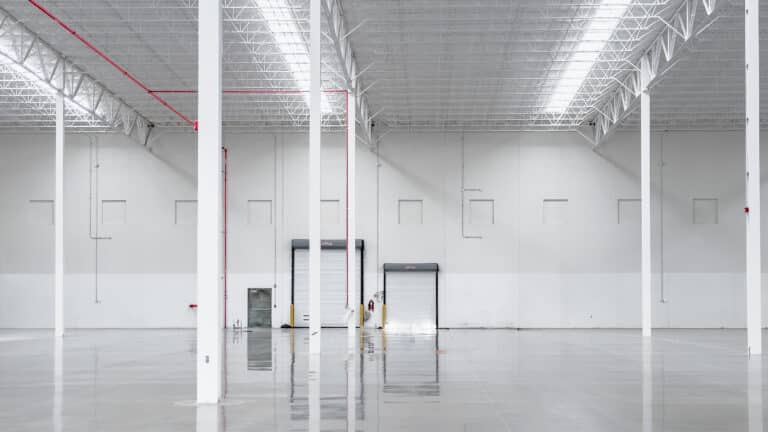
- Flexibility in adapting to build-to-suit projects, adjusting structure, air conditioning and energy according to technical requirements.
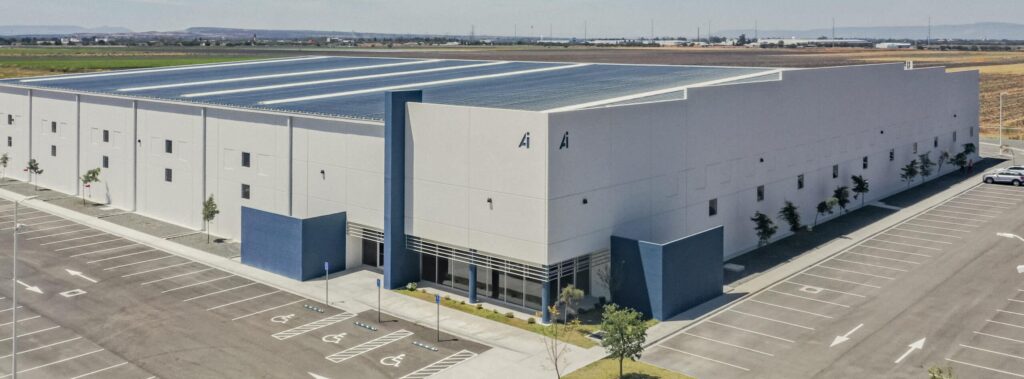
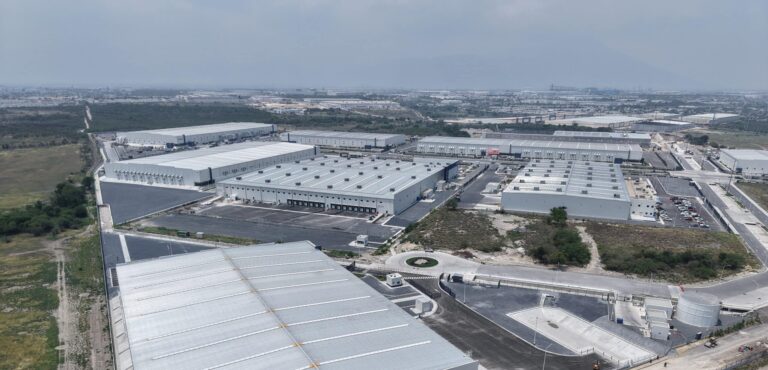
At American Industries Real Estate we offer industrial parks in Mexico ready for lease or custom development, ideal for technology projects such as data centers, computer centers or innovation hubs.
Key requirements to be met by a data center in an industrial building
Before installing a data center in an industrial building, it is essential to ensure that the building meets the necessary technical requirements to guarantee continuous operation, safety and energy efficiency.
These are the key requirements that determine whether an industrial building is suitable for housing critical technology infrastructure:
Power requirements
Power is the heart of a data center. On average, a data center can require between 500 and 2,000 W per m² (0.5-2 kW), depending on rack density and IT load. To meet this, it is essential to have a robust and redundant electrical infrastructure, including:
- UPS (Uninterruptible Power Supply) systems for continuity in case of power outages.
- High capacity backup generators.
- Electrical panels and wiring certified according to ANSI/TIA-942, NFPA 70 (NEC) and IEC 60364, guaranteeing safety and high energy demand.
Proper design ensures operational stability and avoids losses due to power failures.
Cooling systems
Thermal control is critical to maintain hardware operability. The ideal temperature is between 18 and 27 °C, and its management must be constant. To achieve this, industrial buildings must integrate:
- Hot aisle/cold aisle to optimize air flow.
- In-row cooling, direct cooling in the rows of racks.
- Free cooling, which takes advantage of the outside temperature to reduce energy consumption.
The industrial building must allow the integration of these systems without compromising efficiency and structural safety.
Structure and materials of the building
Data centers require buildings with materials that meet industrial safety and seismic resistance standards, ensuring optimal conditions for technological equipment. Key aspects include:
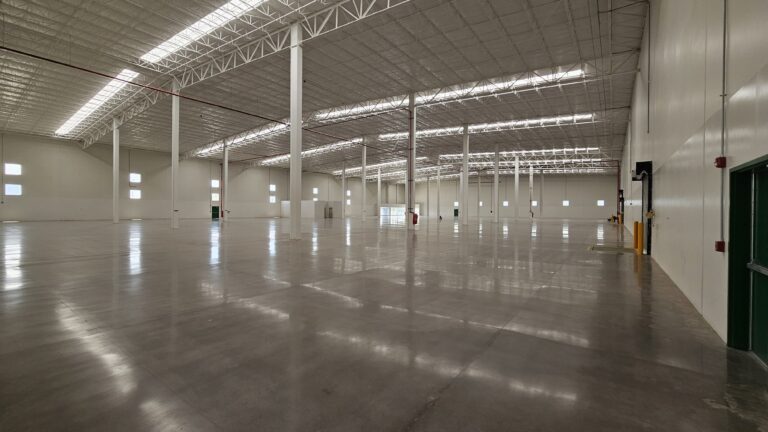
- High structural strength, capable of supporting the weight of racks and electrical systems.
- Thermal and acoustic insulation that minimizes heat and noise transfer.
- Protection against fire and water, with automatic detection and suppression systems.
Physical security
Physical security is as important as digital security. Therefore, a data center must have:
- 24/7 surveillance and CCTV.
- Biometric access controls and restricted areas.
- Protocols against intrusions, fires and natural disasters.
- Constant patrolling and perimeter monitoring within closed industrial parks.
These measures ensure asset protection and service continuity.
Connectivity and telecommunications
A data center depends on redundant, low-latency connectivity, so it must ensure:
- Connection with multiple telecommunications carriers.
- Direct access to Internet backbones and main nodes.
- Stable speeds for massive data transmission.
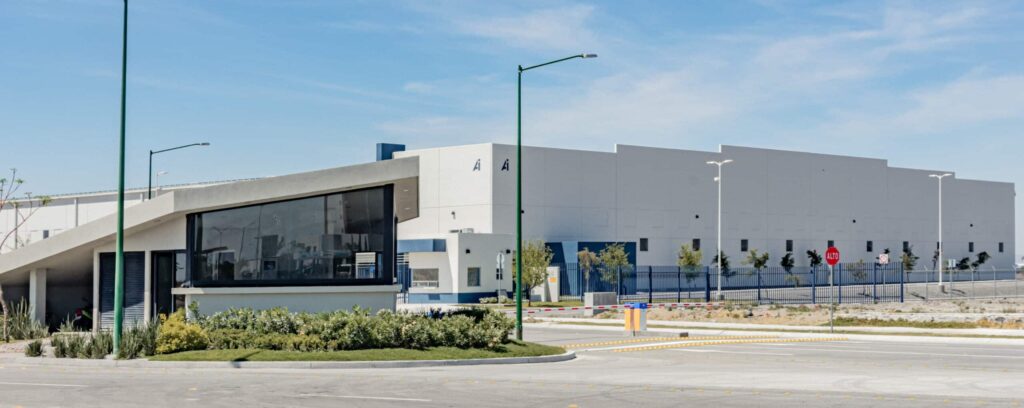
The strategic locations of American Industries' industrial parks facilitate access to these services, ensuring redundancy and high availability.
Redundancy and high availability
Redundancy is the key to operational continuity. It is measured by configurations such as N+1, 2N or 2N+1, and defines availability levels (TIER II to IV). This implies that the data center can continue to operate even if a power or cooling line fails.
For example, an N+1 configuration implies an additional component for each critical system. If 4 cooling units are required, 5 are installed, ensuring continuity even if one fails.
Thus, a TIER III can achieve an availability of 99.982 % per year, while a TIER IV exceeds 99.995 %, reducing downtime to just minutes per year.
Relevant regulations and certifications
Regulatory compliance is an essential pillar in the operation of a data center, as it guarantees the security, continuity and efficiency of the infrastructure. The main international standards establish technical and management standards that ensure the optimal performance of the facilities are:
- Uptime Institute TIER I-IV defines the levels of redundancy, availability and fault tolerance in data centers.
- TIER I. Basic infrastructure, without redundancy.
- TIER II. Partial redundant components (N+1).
- TIER III. Concurrent maintenance, allows operation while work is being carried out.
- TIER IV. Maximum availability with full fault tolerance (2N or 2N+1).
- ISO/IEC 27001. International standard for information security management. It establishes controls and policies that protect the confidentiality, integrity and availability of processed data.
- ISO 50001. Focused on efficient energy management, this certification promotes sustainable practices and reduces operating costs by monitoring and improving energy consumption.
- ANSI/TIA-942. It specifies the technical requirements for physical infrastructure, telecommunications and electrical redundancy in data centers, from structural design to cabling distribution.
- NFPA 70 (National Electrical Code - NEC). It regulates the safe installation of electrical systems to prevent fires, overloads and human hazards in environments with high energy demand.
Compliance with these certifications is not only a legal or contractual requirement, but also has a direct impact on the reputation, operational continuity and trust of end customers.
Common mistakes when adapting an industrial building as a data center
Converting an industrial building into a data center can be an efficient strategy, but it also involves technical challenges that must be accurately assessed.
The following are common mistakes that companies make when adapting these spaces, which can compromise the safety, continuity and operational efficiency of the project:
- Underestimate the energy and thermal needs of the data center.
- Do not consider redundant or low latency connectivity.
- Ignoring certifications or physical security systems.
- Failure to carry out a structural and electrical study prior to the adaptation of the building.
Proper planning from the outset avoids high costs, downtime and operational risks.
Are you looking for an industrial building for your data center?
If your company needs an optimal industrial space to establish a data center or computer center, in American Industries Real Estate we offer:
- Industrial buildings designed or adaptable to technological infrastructure.
- Strategic locations in key regions such as Querétaro, Monterrey, Guadalajara and Chihuahua.
- Immediate availability and expert advice for technological and industrial projects.
With more than 40 years of development experience industrial real estate and a proven track record in technology projects, American Industries Real Estate is your strategic partner for housing critical infrastructure such as data centers.
Don't wait for your technology infrastructure to fall behind. At American Industries Real Estate, our team is ready to assist you. Contact us today to learn more about our turnkey or build-to-suit solutions. Visit our website or schedule a call with our specialized team to get personalized advice on your project.
Visit our website or write to sales@aiig.com to receive personalized advice.